HACCP and Food Safety: Safe Production in Professional Kitchens
Why is food safety important in professional kitchens? Discover the foundations of the HACCP system, hygiene rules and how the right kitchen equipment contributes to safe production.
4 min read İstanbul Profesyonel
HACCP and Food Safety: The Importance of Safe Production in Professional Kitchens
In a professional kitchen, there is one more topic as important as flavor: food safety. The quality of the ingredients used, storage conditions, the cleanliness of kitchen equipment and the hygiene habits of the staff directly affect the reliability of every dish prepared.
Especially in restaurants, hotels, cafes and businesses that produce meals in bulk, food safety should be an integral part of daily operations. This is where the HACCP system comes in.
What Is HACCP?
HACCP is an abbreviation of the English phrase Hazard Analysis and Critical Control Points. In Turkish it is known as Tehlike Analizi ve Kritik Kontrol Noktaları.
Put simply, HACCP is a food safety system that aims to identify in advance and keep under control the hazards that may arise in the process from food preparation to service.
This system is not concerned only with the kitchen being clean. It covers all stages, such as receiving, storing, preparing, cooking, cooling and serving products.
The goal is to prevent a problem from occurring in the first place, rather than looking for a solution after it has arisen.
Why Is HACCP Important in Professional Kitchens?
Think of a busy restaurant kitchen. Throughout the day, different products are received, vegetables are prepared, meat is processed and hundreds of plates are served.
Amid this intensity, even a small oversight can lead to serious consequences.
For example, using a cutting board on which raw chicken was prepared for salad preparation without cleaning it properly can cause cross-contamination. Similarly, products not stored at the right temperature can also pose a food safety risk.
The HACCP approach makes it possible to manage such risks systematically.
A well-implemented food safety system not only protects customers' health but also helps reduce product losses and make the business's service quality sustainable.
5 Key Points to Watch in Food Safety
1. Proper Storage Conditions
Not every food has the same storage conditions. Meat, dairy products, vegetables and frozen foods should be kept at suitable temperatures.
Using professional refrigeration equipment, monitoring temperatures regularly and placing products correctly form the basis of this process.
2. Preventing Cross-Contamination
Contact between raw and cooked foods is one of the significant risks encountered in kitchens.
Using separate cutting boards, knives and prep areas for different product groups reduces this risk. It is especially important to keep raw meat and vegetable preparation separate from each other.
3. Equipment and Surface Hygiene
Counters, machines and kitchen utensils that come into contact with food need to be cleaned regularly and disinfected when necessary.
Stainless steel equipment is widely preferred in professional kitchens thanks to its durable construction and easy-to-clean surfaces. However, no matter how high the quality of the material used, it does not replace regular cleaning practices.
4. Cooking and Temperature Control
Serving food before it reaches a sufficient temperature can pose a health risk.
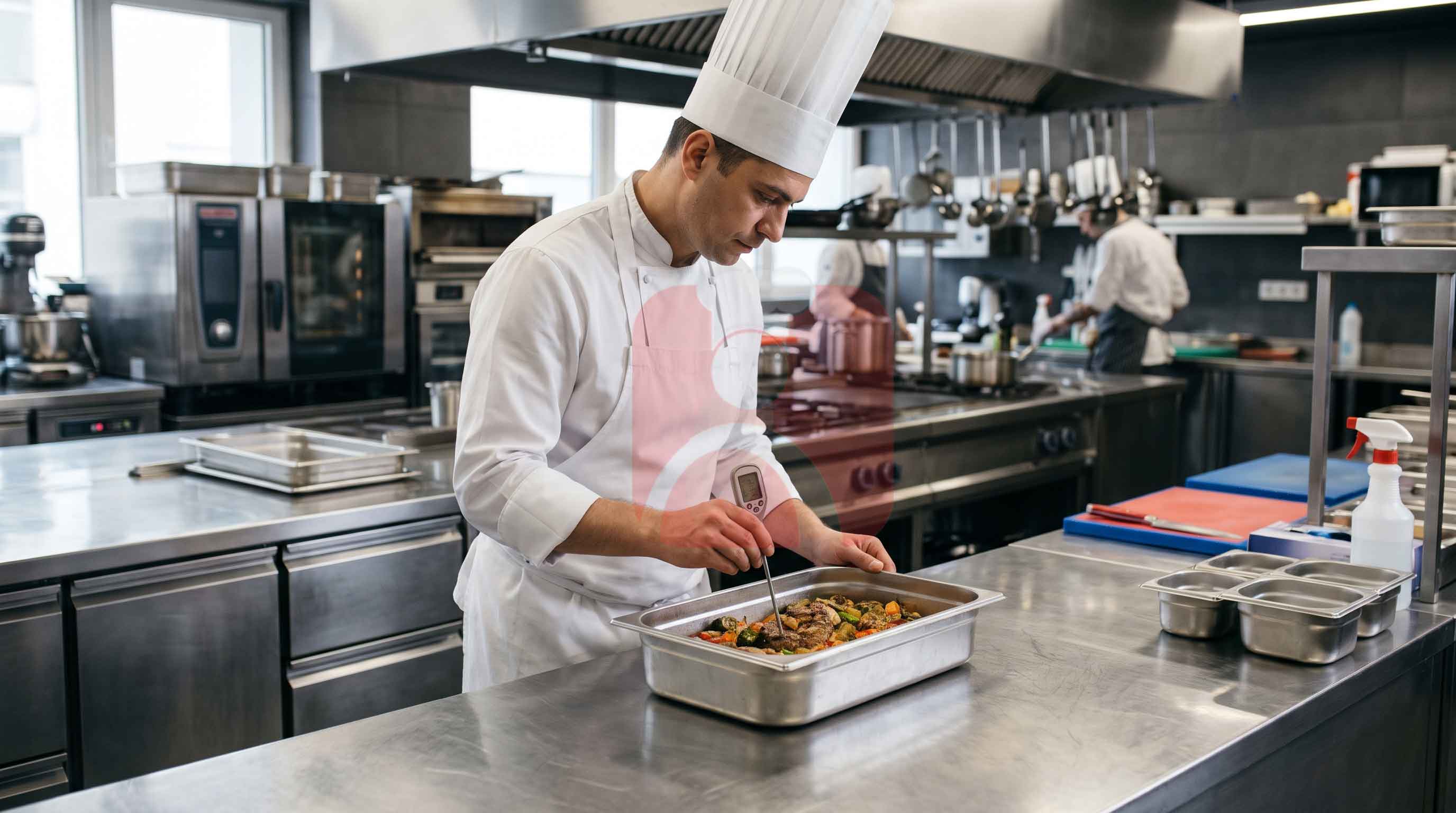
Suitable cooking temperatures need to be monitored, especially for meat, chicken and seafood. Likewise, holding, cooling and reheating cooked dishes should also be done in a controlled way.
5. Staff Hygiene and Training
Even the most advanced kitchen equipment cannot ensure food safety on its own when it is not used correctly.
Hand hygiene, clean work clothing, correct use of equipment and regular staff training are indispensable parts of safe production.
How Does Kitchen Design Affect Food Safety?
Food safety should not be left solely to the attentiveness of employees. The physical layout of the kitchen should also support this process.
For example, if the route along which dirty dishes are carried overlaps with the area where clean plates are served, unnecessary hygiene risks can arise.
Similarly, positioning raw food preparation, cooking, storage and dishwashing areas correctly both improves the work routine and reduces the risk of cross-contamination.
For this reason, commercial kitchen design is not just about placing equipment. Workflow, hygiene requirements and daily operations need to be considered together.
The Right Equipment, a Safe Kitchen
Refrigerated cabinets, prep counters, cooking equipment and dishwashing systems used in professional kitchens are an important part of food safety practices.
Easy-to-clean surfaces, suitable storage capacity and equipment chosen according to the business's needs make it easier to maintain hygiene standards.
But there is one point not to forget: HACCP is not a system that can be implemented simply by buying the right equipment. Risk analysis, regular monitoring, record keeping and employee involvement in the process are also required.
Conclusion: A Safe Kitchen, a Trustworthy Business
In professional kitchens, food safety is not a detail to think about later, but a fundamental issue that needs to be addressed from the business's founding stage.
With a well-planned kitchen, suitable equipment selection and conscientious employees, it is possible to make HACCP practices a natural part of daily operations.
As İstanbul Profesyonel, with our commercial kitchen equipment and design solutions, we contribute to creating efficient, hygiene-focused kitchen spaces suited to the needs of businesses.
Because a good professional kitchen is the place where not only delicious food but also safe production begins.
Last updated