What to Consider When Choosing Commercial Kitchen Equipment
Which technical features should you pay attention to when choosing commercial kitchen equipment? Information on capacity, energy consumption, stainless steel grade and choosing the right equipment.
5 min read İstanbul Profesyonel
What to Consider When Choosing Commercial Kitchen Equipment
When opening a new restaurant or renovating an existing kitchen, one of the most important decisions is the choice of equipment to be used. Ovens, ranges, refrigerators and dishwashers are not just parts of the kitchen, but the core tools that define the business's daily work routine.
However, choosing equipment is not always as easy as it looks. Two appliances with a similar design can differ significantly in terms of capacity, energy consumption, connection requirements and usage features.
For this reason, looking only at the price or outward appearance is not enough when evaluating professional kitchen equipment.
First, Determine the Kitchen's Needs
Before starting to choose equipment, it is necessary to clarify how the business will operate.
How many people will be served daily, which dishes will be on the menu and at what times orders will peak directly affect the equipment needed.
For example, the cooking equipment needs of a business that mainly serves breakfast are not the same as those of a restaurant preparing high-volume dinners.
Likewise, it would not be right to compare the refrigeration capacity of a small cafe with the storage needs of a large hotel.
The first step is not to fill the available space with equipment, but to understand the business's real production needs.
How Is Equipment Capacity Evaluated?
In professional kitchen equipment, capacity is one of the most important technical features.
However, it is necessary to pay attention to what the capacity values stated in catalogs mean.
An oven's tray capacity gives an idea of how many products can be cooked at once. But the size of the trays, the arrangement of products and the cooking method chosen also affect the actual production volume.
Similarly, a dishwasher's hourly rack capacity may not give the same practical result in every business. Preparing, loading and unloading the dishes are also part of the process.
For this reason, equipment capacity should be evaluated according to the kitchen's real working conditions, not just the highest figure in the catalog.
Why Are Electrical and Gas Connections Important?
The technical specifications of commercial kitchen equipment include information such as electrical power, voltage, number of phases and gas consumption.
These values are important for understanding whether the appliance is compatible with the existing infrastructure.
For example, some professional appliances require a three-phase electrical connection, while smaller models can work with different electrical infrastructures.
For gas equipment, the type of gas to be used, connection pressure and ventilation requirements should be taken into account.
An appliance physically fitting into the kitchen does not mean it can be used safely in that space.
For this reason, technical connection requirements need to be evaluated by qualified experts before the equipment is purchased.
What Does Stainless Steel Grade Mean?
Stainless steel is widely used in professional kitchen equipment.
It is preferred for its durability, cleanability and suitability for use on surfaces that come into contact with food.
However, not all stainless steel has the same properties.
For example, grade 304 stainless steel is widely used in many professional kitchen applications. Grade 316 stainless steel, on the other hand, can provide higher resistance under certain chemical and corrosion conditions.
That said, material grade alone is not enough. The quality of the welds, surface workmanship, joints and ease of cleaning also affect the equipment's performance in use.
What matters is that the material used suits the equipment's function and working environment.
Which Features Should Be Checked in Refrigeration Equipment?
When evaluating commercial refrigerators and freezers, it is not right to focus only on interior volume.
Temperature range, cooling performance, door design, insulation properties and the ambient conditions in which the appliance can operate also matter.
Refrigerators to be used in hot kitchen environments in particular need to be chosen to suit the ambient temperature where they will stand.
Digital temperature control and alarm features can make it easier to monitor the storage conditions of products.
Shelf layout and usable interior volume should also be evaluated in terms of daily work.
A cabinet that looks large in the catalog may not always suit the product arrangement the business needs because of its interior layout.
Technical Features of Ovens and Cooking Equipment
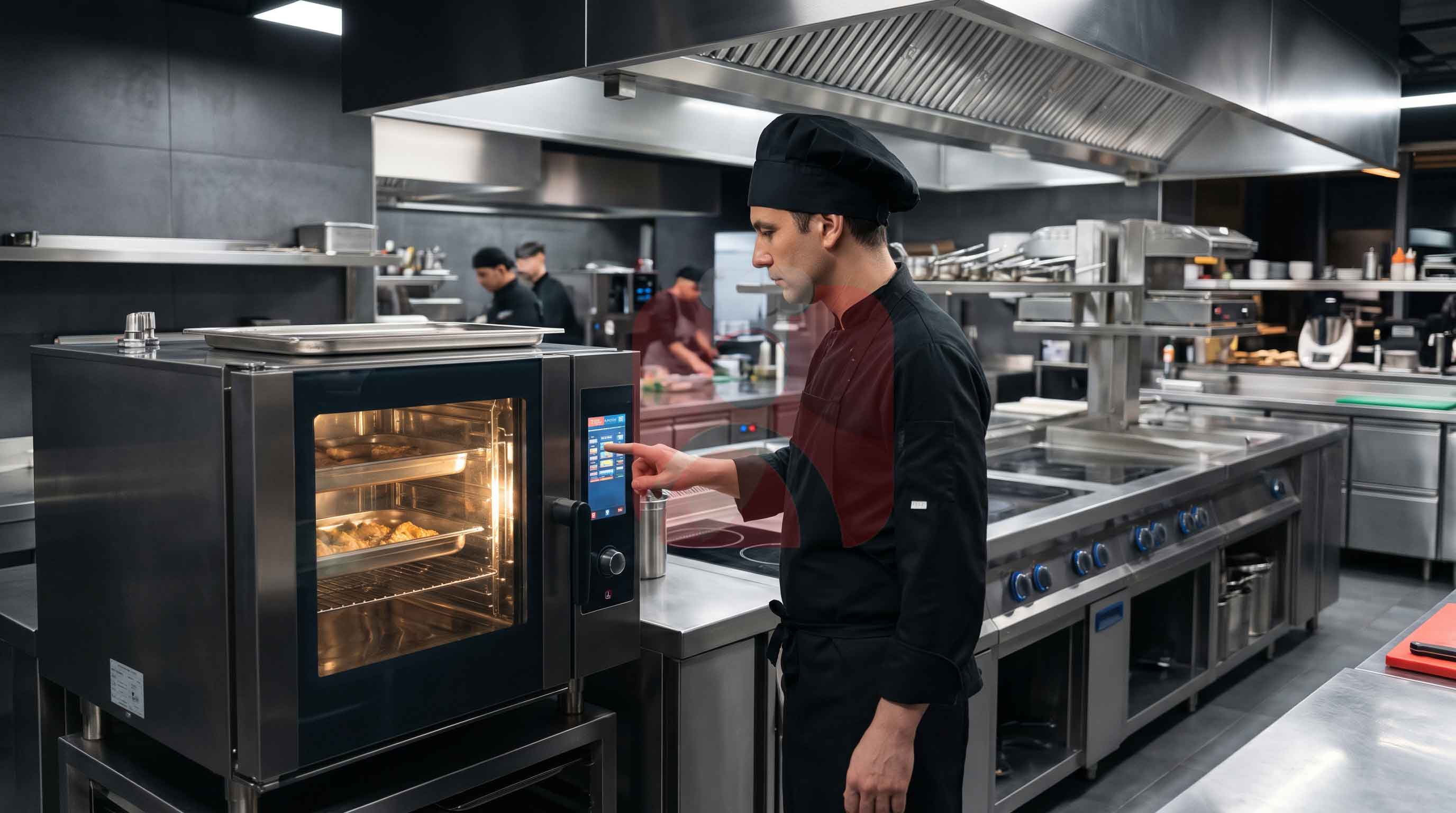
In addition to cooking capacity, professional ovens can come with different options such as temperature control, steam features, programmable settings and cleaning systems.
Combi ovens, for example, make it possible to apply various cooking methods using hot air and steam.
However, not every business may need advanced programming features.
The items on the menu, the staff's usage habits and daily production volume determine which features are truly necessary.
The same approach applies to ranges, griddles and fryers.
Ease of use and cleaning requirements should be taken into account as much as the equipment's technical features.
Equipment Dimensions and Installation Space
An appliance's catalog dimensions are the starting point for the kitchen layout.
However, knowing only the equipment's width, depth and height is not enough.
Suitable space should also be left for opening doors, removing trays, staff work and technical service access.
The required service clearances, especially for ovens, dishwashers and refrigerated cabinets, can vary depending on the appliance's model.
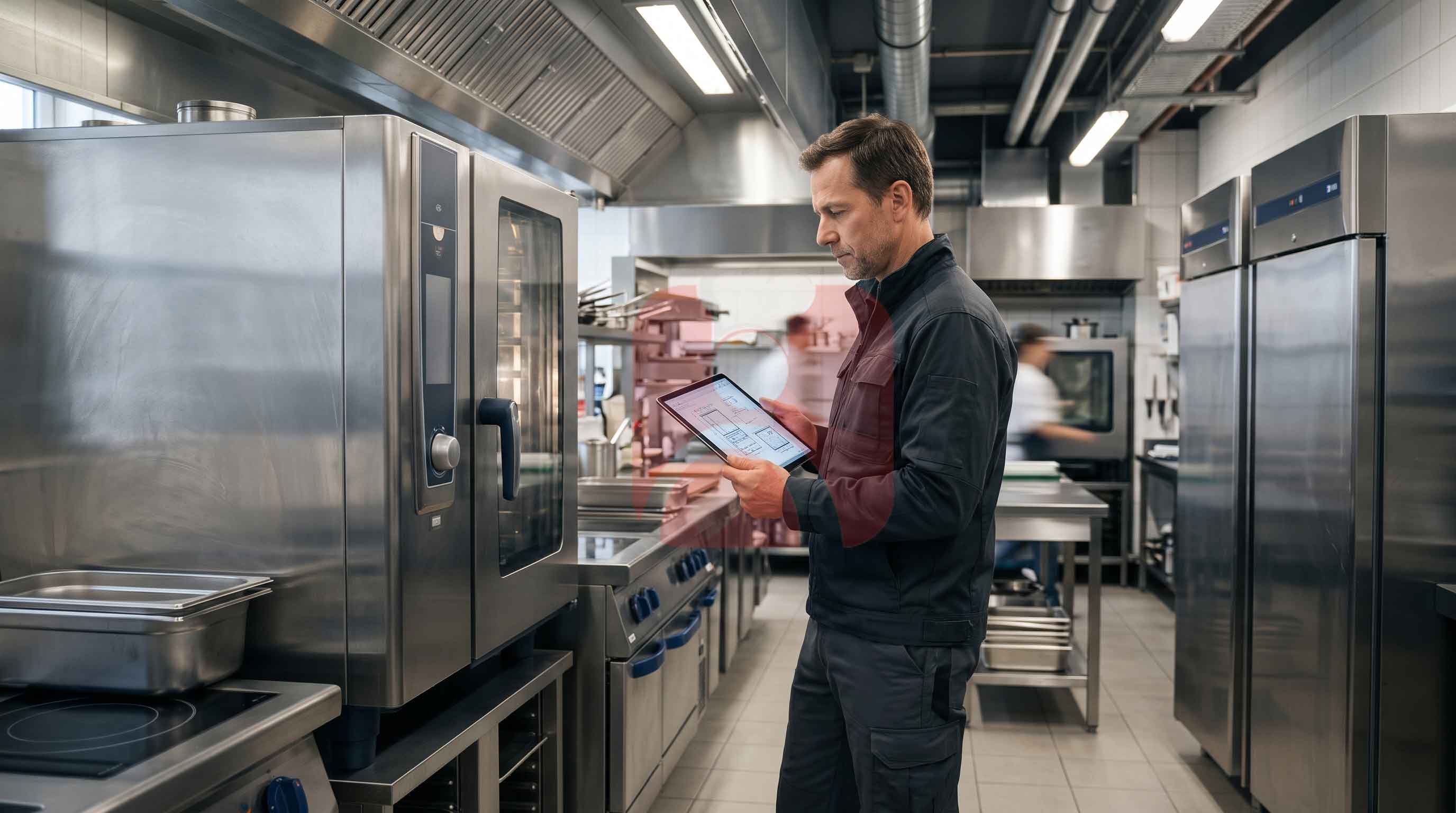
For this reason, the manufacturer's installation instructions and technical drawings should be taken into account when placing equipment.
Otherwise, even if the purchased appliance fits into the kitchen, it can create serious difficulties in daily use.
Energy Consumption and Operating Costs
Evaluating only the initial investment cost when buying equipment can be misleading in the long run.
In professional kitchens, the operating time and usage intensity of appliances significantly affect energy costs.
For example, even if two different pieces of equipment have a similar purchase price, their energy consumption and maintenance needs may differ.
For this reason, whenever possible, the energy consumption of appliances under real usage conditions should be compared.
In addition, spare parts availability, service options and expected service life are also part of the total cost of ownership.
The most economical equipment is not always the appliance with the lowest purchase price.
Technical Service and Spare Parts Support
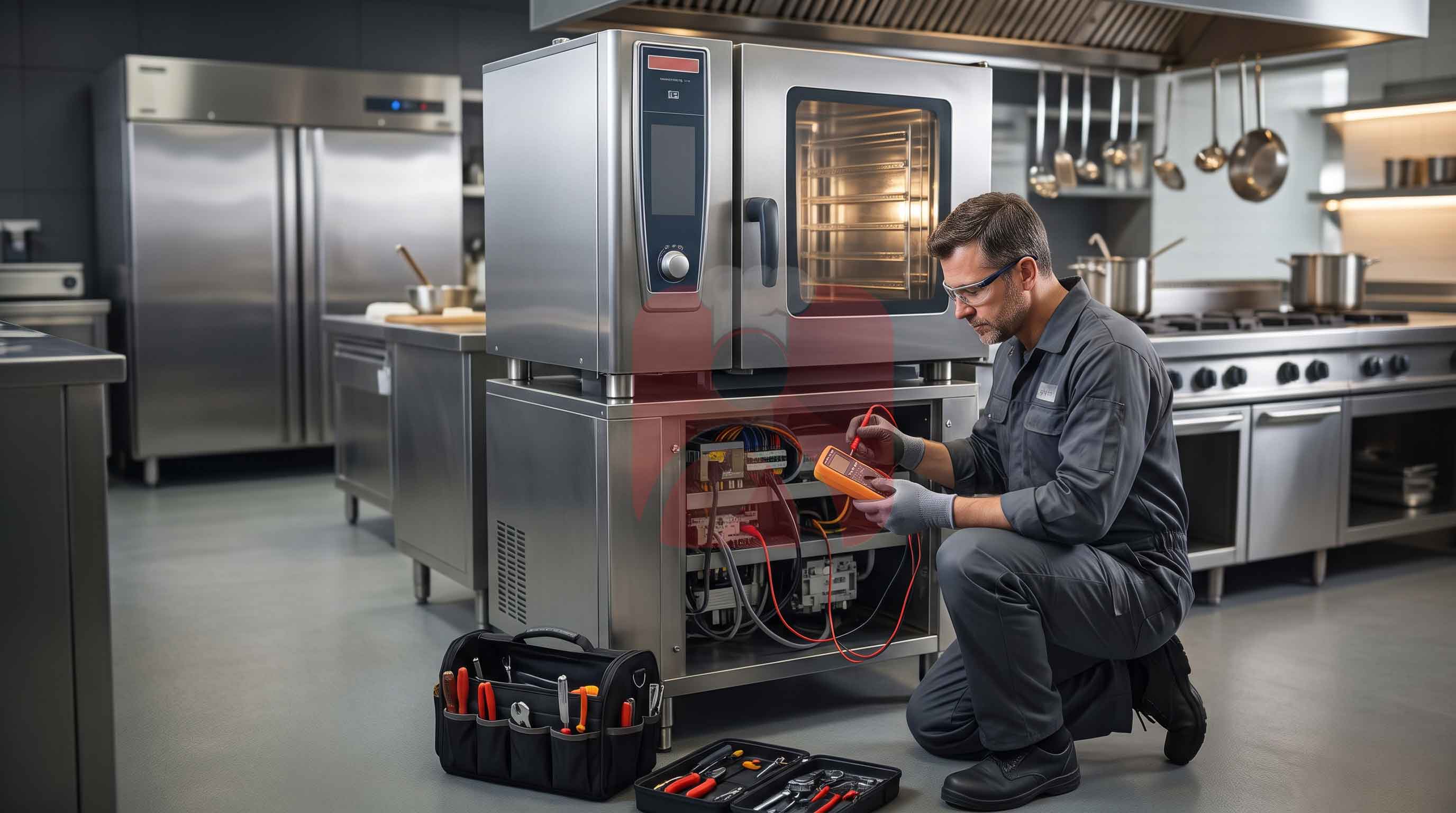
In a professional kitchen, equipment breakdowns do not only create repair costs. Disrupted production and longer service times can also affect the business.
For this reason, when choosing equipment, it is important to research the technical support options of the manufacturer or supplier.
Spare parts supply, warranty terms and access to authorized service should be part of the purchasing decision.
Evaluating service support in advance, especially for heavily used critical equipment, helps reduce operational problems that may be encountered later.
Conclusion: The Right Equipment Is Chosen with the Right Technical Evaluation
Choosing commercial kitchen equipment is not just a product purchasing process.
Capacity, technical infrastructure, material quality, energy consumption, installation dimensions and service requirements should be evaluated together.
Equipment chosen to suit the business's needs contributes to the kitchen running in a more orderly way and to the investment being used more efficiently in the long term.
As İstanbul Profesyonel, with our commercial kitchen equipment and design solutions, we contribute to creating kitchens suited to businesses' production capacity, work space and technical needs.
Because choosing the right equipment is one of the most important decisions made before the kitchen's doors open.
Last updated